
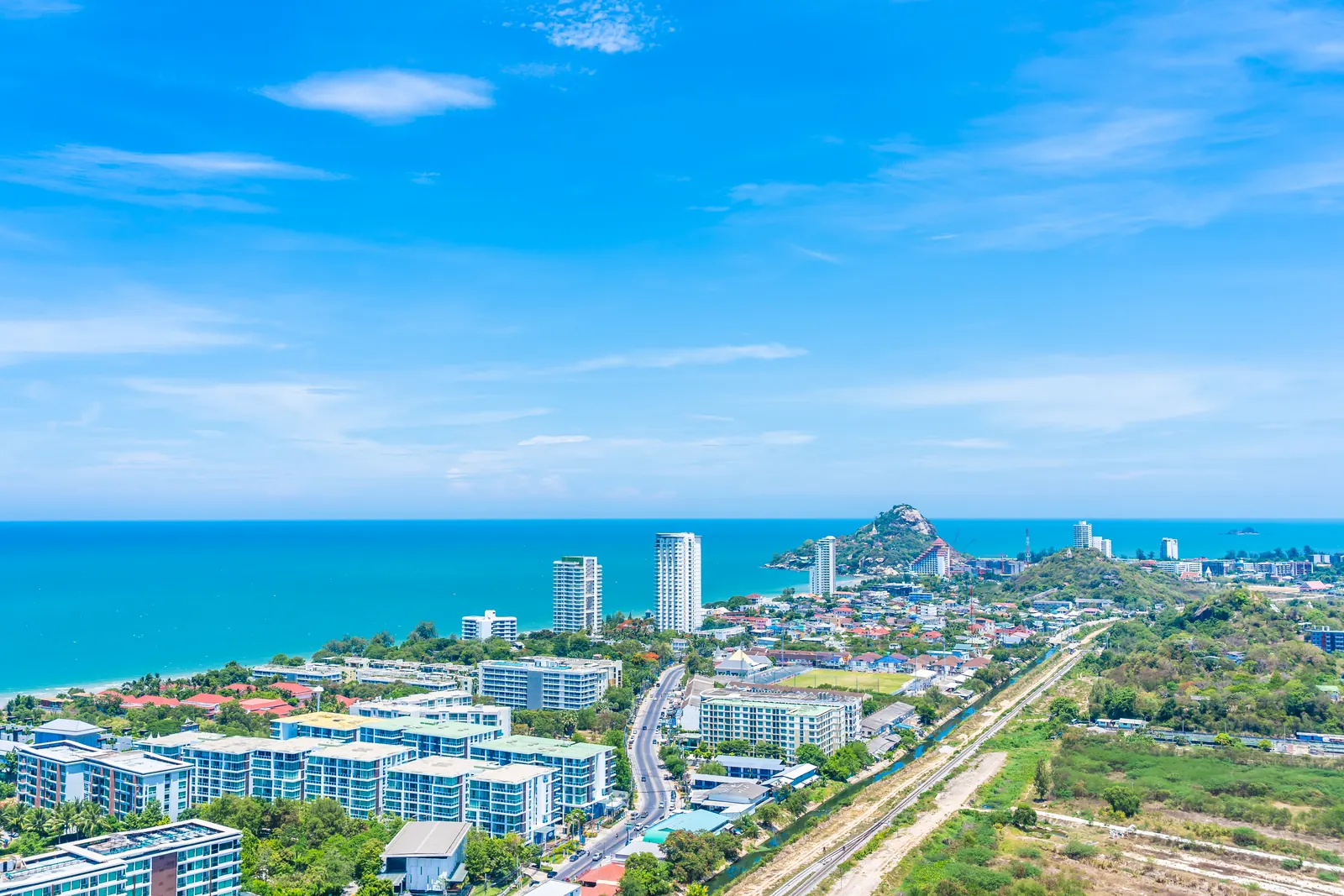
Category: Moving to Hua Hin

  • How to Retire in Thailand: The Hua Hin Guide

    How to Retire in Thailand: The Hua Hin Guide

    Thousands of expats from the UK, Australia, Europe, and North America have retired to Thailand, and Hua Hin is consistently one of the most popular choices. It offers a beach lifestyle, a well-developed expat community, good healthcare, and a cost of living that makes a modest pension go a long way.

    This guide covers the practical steps for retiring to Hua Hin, with a focus on what you actually need to do rather than what sounds appealing in a brochure.

    Is Hua Hin Right for You?

    Hua Hin is a good fit if you want:

    • A relaxed beach town without the intensity of Pattaya or Phuket
    • A large, established expat community (social life is easy)
    • Good healthcare access within the town
    • Easy access to Bangkok (2.5 to 3 hours) for specialist medical or travel
    • Golf. The area has 20+ courses

    It is less suited to people who want buzzing nightlife, mountains, or a more remote experience.

    The Retirement Visa (Non-OA)

    The Non-Immigrant OA visa is the standard long-stay route for retirees aged 50+. Requirements:

    • Age 50 or over
    • No criminal record
    • Either: 800,000 THB in a Thai bank account, OR 65,000 THB/month income, OR a combination
    • Health insurance (now technically required, though enforcement has been inconsistent)

    The visa is initially for 90 days and can be extended to 12 months at Hua Hin immigration. It must be renewed annually. No work is permitted on this visa. See our detailed Visa & Immigration guide.

    Setting Up Your Finances

    Most retirees need to:

    1. Open a Thai bank account (Bangkok Bank is commonly recommended for the retirement visa deposit requirement)
    2. Set up a reliable international transfer method, Wise is widely used and significantly cheaper than bank wire transfers
    3. Understand the ATM fee situation (220 THB fee per withdrawal from Thai ATMs with a foreign card)

    See our Banking & Money guide for detail.

    Finding Accommodation

    Most new retirees start with a short-term hotel or serviced apartment while they look for a long-term rental. This is sensible, Hua Hin is easy to navigate, and a month of exploring different neighbourhoods will help you make a better decision on where to settle.

    Common areas for retirees: central Hua Hin (convenient), Khao Takiab (quieter), or further south towards Pranburi (more space, lower cost, requires own transport). See Finding Accommodation.

    Healthcare

    Bangkok Hospital Hua Hin handles most routine and moderate-complexity healthcare. For serious conditions, Bangkok hospitals are 3 to 3.5 hours away. Get health insurance sorted before you arrive. It is both sensible and often required. See our Healthcare guide and Health Insurance guide.

    What Does Retirement Cost in Hua Hin?

    A comfortable retirement lifestyle, good accommodation, eating out regularly, golf, and travel, runs around 65,000 to 90,000 THB/month for a single person, or 80,000 to 120,000 THB for a couple. A more modest lifestyle can be managed for 35,000 to 50,000 THB. See our Cost of Living guide for full detail.

    Getting the Most Out of Expat Life

    The social side of retirement in Hua Hin is genuinely easy. The expat community is active and welcoming. Facebook groups, golf societies, expat clubs, and regular events mean you can fill your social calendar within weeks of arriving. See the Facebook Groups guide for a starting point.

    Related: Visa & Immigration | Cost of Living | Healthcare

  • Best Areas to Live in Hua Hin for Expats

    Best Areas to Live in Hua Hin for Expats

    Hua Hin is not a large city, but the different neighbourhoods offer meaningfully different lifestyles. Central Hua Hin is convenient and busy; areas south like Khao Takiab are quieter and more residential; Pranburi is cheaper and more rural. Choosing where to live is one of the first decisions that shapes your experience here.

    Central Hua Hin

    Central Hua Hin, within walking distance of the main beach and the market area, is the most convenient location. Restaurants, cafes, supermarkets, clinics, and transport options are all close by. Rent is higher than other areas, but the daily convenience is significant for people without their own vehicle.

    Best for: First-timers, people without a car, those who want to be at the centre of expat social life.

    Khao Takiab (South Hua Hin)

    Khao Takiab is about 6 to 8 km south of central Hua Hin. It has a more residential, local feel, a fishing village at the base of the headland, quieter streets, good local food, and slightly lower rents. The beach here is cleaner and less busy than the main beach.

    You need transport to get in and out easily, a motorbike or car is recommended. But for many long-term expats. This is the preferred area once they are settled.

    Best for: Long-term residents, those who prefer a quieter local atmosphere, people with their own transport.

    Nong Kae and Inland Areas

    Moving away from the beach and into more residential streets brings significantly lower rents. Areas like Nong Kae and the roads inland from the coastal strip have local markets, good everyday food, and less tourist activity. Less attractive for those who want beach access, but very practical for daily living.

    Best for: Budget-conscious expats, families with school-age children, people who prioritise residential over resort feel.

    North Hua Hin (towards Cha-Am)

    Heading north from central Hua Hin. There are several large condo developments and housing projects within 15 to 25 minutes of town. These areas are particularly popular with golfers due to proximity to several major golf courses. The infrastructure is good but daily conveniences require driving.

    Best for: Golfers, those who want newer property, people comfortable driving to town for daily errands.

    Pranburi (25km South)

    Pranburi is a different experience entirely. It is quieter, more rural, and the beaches are among the least developed and most beautiful in the region. Property costs are lower. You can rent a house with a garden for what a modest condo costs in central Hua Hin. The trade-off is distance: Hua Hin is 25 to 30 minutes away, and Pranburi has limited local expat infrastructure.

    Best for: Those seeking real quiet, nature, and lower costs; people who are established in Thailand and know what they want.

    How to Decide

    The standard advice is to rent short-term in your first choice area and then move if it does not suit you. Do not sign a 12-month lease on your first week in Thailand. Spend a month in Hua Hin first, explore different neighbourhoods on foot and by motorbike, and let the decision emerge naturally.

    Related: Finding Accommodation | Cost of Living | Real Estate Agents in Hua Hin

  • Healthcare in Hua Hin for Expats

    Healthcare in Hua Hin for Expats

    Healthcare is one of the most important practical considerations for expats moving to Thailand. The good news is that Hua Hin has reasonable medical facilities for a town of its size. Costs are significantly lower than in Western countries, and Bangkok, with its world-class hospitals, is only 3 hours away.

    Hospitals

    Hua Hin has two main private hospitals:

    • Bangkok Hospital Hua Hin: Part of the BDMS hospital group. Modern facilities, English-speaking doctors, international patient services. The most comprehensive option in Hua Hin. Handles most routine, moderate, and some complex cases. Has various specialist clinics.
    • San Paulo Hospital: Smaller, less expensive. Good for routine consultations. Some English-speaking staff.

    For serious emergencies or complex specialist care, patients are typically transferred to Bangkok hospitals (Samitivej, Bumrungrad, Bangkok Hospital network). Plan your travel insurance and health insurance accordingly.

    Browse Medical & Dental Directory →

    Clinics

    Several private GP-style clinics operate throughout Hua Hin. Consultation fees: 300 to 600 THB. Good for minor illness, repeat prescriptions, and routine health management. No appointment usually needed.

    Dental Care

    Dental care is genuinely excellent and affordable in Thailand. Routine check-ups and cleans: 500 to 800 THB. Crowns, implants, and more complex work are typically 30 to 60% cheaper than equivalent work in the UK, Australia, or the US, with quality at international-standard clinics that is often better than you would receive at home.

    Many expats in Hua Hin now plan dental work as part of their regular healthcare rather than waiting for problems to develop.

    Cost of Healthcare

    • GP consultation (private clinic): 300 to 600 THB
    • Hospital consultation (Bangkok Hospital HH): 600 to 1,200 THB
    • Blood tests, basic panel: 500 to 1,500 THB
    • Dental check and clean: 500 to 800 THB
    • Dental crown: 5,000 to 15,000 THB

    Health Insurance

    Private health insurance is highly recommended for expats in Hua Hin. While day-to-day care is affordable, a serious accident or illness can generate bills of 200,000 to 500,000+ THB. International health insurance covering Thailand costs roughly 50,000 to 120,000 THB/year depending on age, cover level, and existing conditions.

    See our Health Insurance guide for what to look for and how to compare options.

    Emergency Contacts

    • Medical emergency: 1669
    • Police: 191
    • Tourist Police (English): 1155

    Related: Healthcare Guide | Health Insurance | Medical & Dental in Hua Hin

  • How to Open a Bank Account in Hua Hin

    How to Open a Bank Account in Hua Hin

    Opening a Thai bank account is one of the first practical tasks for expats in Hua Hin. You need one to receive the retirement visa financial requirement, pay rent, and avoid ongoing ATM fees on your foreign card. The process is not complicated, but the requirements have tightened in recent years.

    Documents You Will Need

    Requirements vary by bank and can change. As of 2026, most banks require:

    • Passport (original)
    • Current valid Thai visa (tourist visa exemptions may be refused at some branches)
    • Proof of address in Thailand (rental contract, TM30 document, or utility bill in your name)
    • Some branches also require a letter from your embassy
    • An initial deposit (typically 5,000 to 10,000 THB)

    Having a Non-Immigrant visa significantly increases your chances of a smooth account opening. Some banks in Hua Hin will open accounts for tourists on visa exemption; others will not. If you are refused, try a different branch or bank.

    Which Bank?

    • Bangkok Bank: Most commonly recommended for expats. Good English support, easy international transfers, widely accepted by immigration for visa financial requirements.
    • Kasikorn Bank (KBank): Good app and online banking. Popular with expats. Generally accommodating for account opening.
    • SCB (Siam Commercial Bank): Large network. Solid option.
    • Krungthai Bank: Government-owned. Sometimes specifically required for certain visa-related transactions.

    For the retirement visa 800,000 THB deposit, Bangkok Bank and Krungthai are the two most commonly used options. Confirm current requirements with your visa agent before opening.

    See our Banks & ATMs directory for branch locations in Hua Hin.

    Step-by-Step Process

    1. Assemble all documents before visiting the bank
    2. Visit the branch in person (not all branches handle foreigner account opening, call ahead)
    3. Ask for a savings account (ออมทรัพย์ / om sup)
    4. Complete the application form with assistance from bank staff
    5. Initial deposit (cash in THB)
    6. Receive passbook and debit card (card may take 1 to 2 weeks to arrive)

    After Opening

    Once your account is open, set up online banking immediately. For international transfers to your Thai account, use Wise rather than your home bank, it typically saves a meaningful amount per transfer on exchange rate margins and fees.

    Related: Banking & Money Guide | Banks in Hua Hin | Money Transfers

  • Visa Options for Thailand Explained (2026)

    Visa Options for Thailand Explained (2026)

    Understanding Thai visas is essential before moving to Hua Hin. The visa system can seem complex, but once you understand the main categories, the right option for your situation is usually clear. This article covers the most common visa types for long-stay expats and retirees.

    Note: Thai immigration rules change periodically. Always verify current requirements with the Thai embassy in your country or a qualified visa agent before applying. See our Visa & Immigration guide for the most current guidance.

    Visa Exemption (Tourist Entry)

    Citizens of most Western countries (UK, USA, Australia, Canada, most EU nations) are allowed to enter Thailand visa-free for 30 days, extendable once by 30 days at an immigration office. For short visits and first trips to Hua Hin. This works fine. For longer stays. You need a different approach.

    Tourist Visa (TR)

    A Tourist Visa obtained from a Thai embassy before arrival allows 60 days, extendable by 30 days at immigration. Multiple-entry tourist visas are available, allowing repeated 60-day entries for around 6 months. Useful for extended stays where you do not yet qualify or wish to apply for a Non-Immigrant visa.

    Non-Immigrant OA (Retirement Visa)

    The primary visa for expat retirees aged 50 and over. Allows a 12-month stay (extendable annually) with no limit on the number of renewals. No work permitted. Requires:

    • Age 50+
    • 800,000 THB in a Thai bank account OR 65,000 THB/month income
    • No criminal record
    • Health insurance (requirement details vary, confirm current rules)

    90-day reporting to immigration is required. Most expats renew at Hua Hin immigration with or without the help of a visa agent.

    Non-Immigrant O (Based on Family/Marriage)

    For those married to a Thai national or with close Thai family. Different financial requirements. A common route for expats in mixed-nationality relationships.

    Non-Immigrant B (Business/Work)

    Required for working in Thailand. Must be sponsored by a Thai employer. Requires a Work Permit in addition to the visa. Not relevant to most retirees but important for those who plan to work.

    Thailand Long-Term Resident (LTR) Visa

    Introduced in 2022, the LTR visa targets high-net-worth individuals, retirees with income above certain thresholds, and remote workers. Offers a 10-year renewable visa with additional benefits. Requirements are higher than the standard Non-OA but the long-term certainty appeals to some expats.

    Getting Help

    For annual retirement visa renewals and navigating immigration, many expats use a licensed visa agent in Hua Hin. Fees are typically 3,000 to 6,000 THB for a full renewal service and are well worth it for the time and stress saved.

    Browse Visa Agents in Hua Hin →

    Related: Visa & Immigration Guide | How to Retire in Thailand | Legal & Visa Services

  • Renting vs Buying Property in Hua Hin

    Renting vs Buying Property in Hua Hin

    One of the biggest financial decisions for expats in Hua Hin is whether to rent or buy property. The answer for the vast majority of expats, at least initially, is to rent. Thai property ownership laws for foreigners are complex and restrictive, and the rental market offers very good value without the legal headaches.

    Why Most Expats Rent

    • Legal restrictions on foreign ownership: Foreigners cannot own land in Thailand. Condo ownership is possible (under the foreign ownership quota, max 49% of units), but houses and land require complex legal structures.
    • Flexibility: Renting lets you move neighbourhood, city, or country without being locked in
    • Rental value: The cost-to-rent ratio in Hua Hin is favourable, good quality accommodation at reasonable prices
    • Avoid upfront capital commitment: The 800,000 THB retirement visa deposit already ties up capital; buying ties up much more

    Renting in Hua Hin

    The rental market is well-developed. Expats have a range of options from studio condos to pool villas. Long-term rental is straightforward: agree a price, sign a lease (most are 12 months), pay 2-month deposit plus 1 month upfront. See our Finding Accommodation guide for detail.

    Condo Ownership for Foreigners

    Foreign freehold condo ownership is legal in Thailand under the Condominium Act. The constraint is that foreigners collectively cannot own more than 49% of units in any building. Many new developments have been built with this foreign quota largely sold, which limits availability in popular areas.

    If buying a condo, key considerations include:

    • Engage a qualified Thai property lawyer before signing anything
    • Confirm the building’s foreign ownership quota is not already full
    • Understand ongoing maintenance fees and sinking fund requirements
    • Confirm the developer’s track record if buying off-plan

    Leasehold

    Foreigners can hold land or a house on a long-term leasehold basis (typically 30 years, sometimes with renewal options). This is a common structure for villas and houses. A leasehold is not ownership, the land reverts to the landowner at the end of the lease. Leaseholds require careful legal structuring and due diligence.

    The Honest Assessment

    Property investment in Thailand can be profitable for those who know the market and have good legal advice, but it carries more risk than many expats initially appreciate. For most people moving to Hua Hin: rent for at least 1 to 2 years first. Understand the market, find out where you want to be, and then make a considered decision about buying if you are committed to staying long-term.

    See our Real Estate directory for reputable agents in Hua Hin who can advise on both rental and purchase.

    Related: Finding Accommodation | Cost of Living | Real Estate Agents

  • Getting Around Hua Hin: The Complete Transport Guide

    Getting Around Hua Hin: The Complete Transport Guide

    Hua Hin is compact enough to walk around the central area, but having your own transport makes daily life significantly easier and opens up the wider region. This guide covers every transport option, from the cheapest (songthaew) to the most convenient (car rental).

    Walking

    The central Hua Hin area, beach, night market, main shopping streets, is walkable. In the cooler months (November to February), walking is pleasant. From March to October. The heat makes longer walks uncomfortable. Most errands outside the immediate town centre benefit from motorised transport.

    Songthaews (Shared Trucks)

    Songthaews are converted pickup trucks with bench seating in the covered rear. They run fixed routes around Hua Hin and are the cheapest option at 10 to 30 THB per ride. Flag them down on the main roads. Useful once you understand the routes, not obvious to newcomers.

    Motorbike Taxis

    Men in orange vests wait at intersections and shopping areas. Quick and cheap for short hops. Agree the fare before getting on, 40 to 100 THB for most journeys in central Hua Hin.

    Grab

    Grab functions like Uber throughout Thailand. Fixed price, clean vehicle, no negotiation. Slightly more expensive than songthaews but far more convenient, especially with luggage or at night. A reliable option for most expats. Download the Grab app before you arrive.

    Renting a Motorbike

    A motorbike or scooter dramatically increases your freedom in Hua Hin. Monthly rental: 3,000 to 5,000 THB for a basic automatic scooter. You need an international driving licence (or Thai driving licence for longer stays). Ride carefully, Thailand’s road accident rate is high, and rules of the road are often informal in practice. Always wear a helmet.

    Renting a Car

    Essential if you plan to spend significant time outside central Hua Hin, trips to Pranburi, golf courses in the north, or regular drives to Bangkok. Monthly rental starts around 15,000 to 20,000 THB for a small car. International driving licence required. See our Car & Motorbike Rental directory for local agencies.

    Tuk-Tuks

    Traditional tuk-tuks operate in Hua Hin but are more of a tourist experience than a practical transport choice. Negotiate fares carefully.

    Getting to Bangkok

    Minivans (200 to 250 THB, ~3 hours) and buses (200 to 280 THB, ~3.5 to 4 hours) run regularly from Hua Hin to Bangkok. Private taxis are more expensive but door-to-door. See our Getting Here guide for full Bangkok options.

    Browse Car & Motorbike Rental →

    Related: Transport Guide | Getting to Hua Hin | Car Rental Directory

  • Safety in Hua Hin: What Expats Should Know

    Safety in Hua Hin: What Expats Should Know

    Hua Hin is one of the safer destinations in Southeast Asia for expats. Violent crime against foreigners is rare, and the town has a settled, family-friendly atmosphere rather than the aggressive tourist hustle found in some Thai resort towns. That said. There are practical safety matters that every expat should be aware of.

    General Safety

    Hua Hin is generally safe to walk around day and night. The expat community is large and well-established. Serious crimes against foreigners are uncommon and widely reported in the local Facebook groups when they do occur. Standard city precautions apply, be aware of your surroundings, do not carry large amounts of cash, and keep valuables secure.

    Road Safety

    Road accidents are the single biggest safety risk in Thailand and in Hua Hin specifically. Thailand has a high rate of road fatalities. Key points:

    • Always wear a helmet on a motorbike or bicycle
    • Drive carefully and defensively, other road users do not always follow rules
    • Be especially cautious at night and in wet weather
    • Avoid renting a motorbike if you are not an experienced rider
    • Drunk driving enforcement varies, do not drive after drinking

    Petty Theft

    Bag snatching and theft from cars and motorbikes can occur. Keep valuables in a bag worn across your body rather than hanging off one shoulder. Do not leave valuables visible in parked vehicles. Keep your phone in a front pocket when walking in busy areas.

    Scams

    Common scams in Thailand include gem scams (someone offers to help you buy gemstones at a special price, always a scam), tuk-tuk tours to closed attractions, and overcharging tourists. In Hua Hin. These are less prevalent than in Bangkok or Pattaya but still occur. Use your judgement and be sceptical of anyone who approaches you with an unsolicited offer.

    Natural Hazards

    • Sun: Thailand’s sun is extremely strong. Use high-SPF sunscreen, wear a hat, and avoid prolonged midday sun exposure.
    • Jellyfish: Jellyfish are occasionally present in the Gulf of Thailand. Check with locals before swimming in unfamiliar areas.
    • Flooding: Heavy seasonal rains (August to October) can cause localised flooding in low-lying areas of Hua Hin. When renting, check that your property is not in a known flood zone.

    Emergency Numbers

    • Emergency (police/ambulance/fire): 191 / 1669
    • Tourist Police (English): 1155
    • Bangkok Hospital Hua Hin emergency: keep this number in your phone

    Practical Tips

    • Register with your home country’s embassy in Bangkok for emergency contact purposes
    • Keep digital copies of your passport and visa in secure cloud storage
    • Know the location of the nearest hospital and immigration office
    • Join local expat Facebook groups. They are an excellent early-warning system for current local issues

    Related: Healthcare Guide | Visa & Immigration | Getting Around Hua Hin

  • Monthly Budget for Living in Hua Hin (2026 Breakdown)

    Monthly Budget for Living in Hua Hin (2026 Breakdown)

    How much money do you actually need to live in Hua Hin? The figures below are based on realistic estimates for 2026. Three budget profiles cover most situations: a single person on a tight budget, a single person with a comfortable lifestyle, and a couple living well.

    Profile 1, Single Person, Modest Lifestyle

    This covers a single person living in a basic but clean 1-bed condo, eating mostly at local Thai restaurants, using a rental motorbike for transport, and not spending heavily on entertainment or dining out.

    Expense THB/month
    Rent (1-bed condo, off-beach) 12,000
    Food (mostly local) 8,000
    Utilities (electric, water, internet) 3,500
    Motorbike rental 3,500
    Health insurance (amortised) 4,500
    Visa renewal (amortised) 500
    Entertainment & misc 4,000
    Total ~36,000 THB

    Profile 2, Single Person, Comfortable Lifestyle

    Good central condo, mix of local and Western dining, regular socialising, and occasional activities.

    Expense THB/month
    Rent (1-bed condo, central) 20,000
    Food (mix local/Western) 15,000
    Utilities 5,000
    Car rental 18,000
    Health insurance 7,000
    Leisure (golf x2/wk) 10,000
    Entertainment & misc 8,000
    Total ~83,000 THB

    Profile 3, Couple, Comfortable Lifestyle

    Larger condo or house, good lifestyle, car, regular dining out and activities.

    Estimated range: 90,000 to 130,000 THB/month depending on accommodation choice and leisure spending.

    What These Numbers Mean

    At GBP/USD/AUD rates as of 2026:

    • 36,000 THB = approx £830 / USD 1,030 / AUD 1,620
    • 83,000 THB = approx £1,910 / USD 2,370 / AUD 3,730

    A UK pension of £1,200/month comfortably covers a modest single-person lifestyle. A pension of £2,500/month covers a comfortable lifestyle with a car and regular leisure.

    What Is Not Included

    These budgets do not include: large one-off healthcare events (why insurance is essential), flights home, major purchases, or savings. Factor those in separately.

    Related: Full Cost of Living Guide | How to Retire in Thailand | Health Insurance

  • Cost of Living in Hua Hin for Expats (2026)

    Cost of Living in Hua Hin for Expats (2026)

    One of the most common questions from people considering a move to Hua Hin is: “What does it actually cost to live there?” The honest answer is: it depends entirely on your lifestyle. You can live simply for under 35,000 THB a month, or spend 120,000 THB+ with a nice condo, a car, regular dining out, and golf.

    This article gives real figures based on expat experience in 2026. All costs are in Thai baht (THB). As a rough reference, 35 THB = approximately 1 USD / 0.80 GBP (rates fluctuate, check current rates before planning).

    The Quick Summary

    • Basic comfortable lifestyle: 35,000 to 55,000 THB/month
    • Comfortable mid-range lifestyle: 60,000 to 90,000 THB/month
    • Upscale (nice condo, car, regular dining and golf): 100,000 to 150,000+ THB/month

    These figures exclude one-off startup costs (visa fees, furniture, deposits) and major healthcare events. See our full Cost of Living guide for a complete breakdown.

    Rent

    Rent is the biggest variable. Location and property type make an enormous difference:

    • Basic 1-bed condo (off-beach, older building): 8,000 to 12,000 THB/month
    • Good 1-bed condo (central, pool, gym): 15,000 to 25,000 THB/month
    • 2-bed house or villa with pool: 25,000 to 60,000+ THB/month

    Most expats find that 15,000 to 22,000 THB/month gets a comfortable 1-bed condo in a decent location. See Finding Accommodation for detail.

    Food

    Food is where the cost of living in Thailand really becomes attractive. If you eat primarily at local Thai restaurants and markets, two people can eat very well for 300 to 500 THB/day. Adding Western meals and supermarket shopping pushes this to 600 to 1,200 THB/day.

    Utilities

    Electricity is the main cost. Thailand is hot, and air conditioning is expensive to run. Expect:

    • Electricity with regular AC use: 2,000 to 5,000 THB/month
    • Water: 200 to 400 THB/month
    • Internet (100 Mbps fibre): 600 to 900 THB/month

    Transport

    Without a vehicle: 3,000 to 6,000 THB/month (Grab, songthaews, motorbike taxis).
    With a rental motorbike: add 3,000 to 5,000 THB/month.
    With a rental car: add 15,000 to 25,000 THB/month.

    Healthcare

    Routine healthcare is inexpensive. A GP consultation costs 300 to 600 THB. Factor in health insurance (typically 50,000 to 120,000 THB/year depending on age and cover), which comes to 4,000 to 10,000 THB/month amortised.

    Entertainment and Leisure

    This is highly variable. A golf round costs 1,000 to 2,500 THB. A beer at a local bar is 60 to 100 THB. Cinema: 200 THB. Thai massage: 200 to 400 THB/hour. Most expats find Hua Hin very affordable for a good social life.

    Sample Monthly Budgets

    Single person, modest lifestyle:
    Rent 14,000 + food 8,000 + utilities 3,000 + transport 3,000 + healthcare 4,000 + leisure 4,000 = ~36,000 THB

    Couple, comfortable lifestyle:
    Rent 22,000 + food 15,000 + utilities 4,500 + motorbike 4,000 + healthcare 8,000 + leisure 10,000 = ~63,500 THB

    Related: Full Cost of Living Guide | Finding Accommodation | Transport Guide